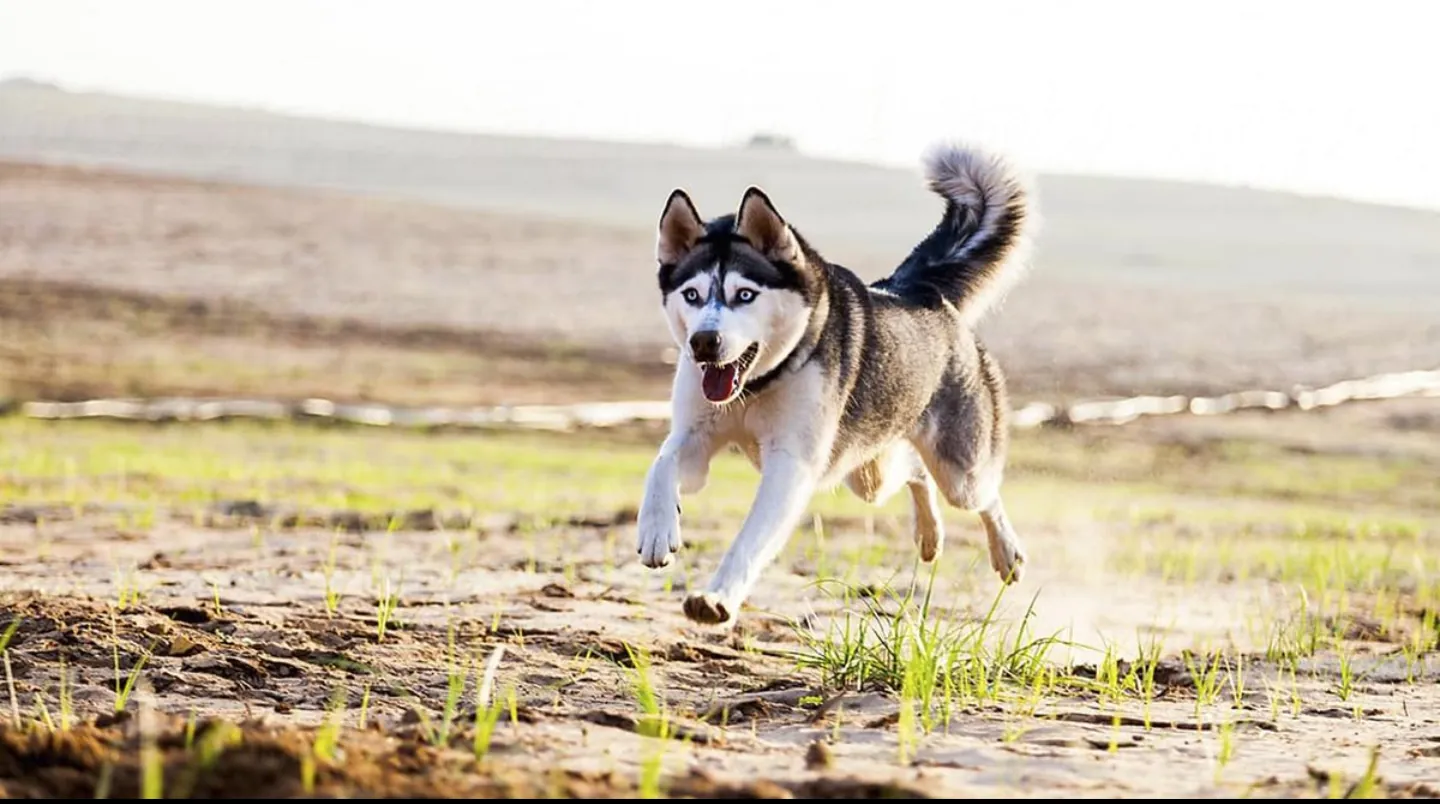
Siberian Husky: Breed Hub
A working sled dog in a pet home — beautiful, determined, and frequently misunderstood
Siberian Husky Age in Human Years
Based on the Horvath Lab 2020 epigenetic clock study — significantly more accurate than the 7× rule, adjusted for medium breed size.
Siberian Husky at a Glance
Breed group: Working · Origin: Siberia (Chukchi people), thousands of years
The Siberian Husky was developed by the Chukchi people of northeastern Siberia as a light, fast sled dog capable of covering enormous distances on minimal food. Brought to Alaska during the Nome Gold Rush, the breed became famous when teams of Huskies ran diphtheria antitoxin to Nome in 1925 (the story behind the Iditarod). The breed is defined by endurance: they were bred to run 100 miles per day for multiple consecutive days. In a pet home, that drive doesn't disappear — it redirects. The defining challenge of Husky ownership is providing adequate exercise and preventing escape, which Huskies pursue with extraordinary determination. They are expert climbers, diggers, and jumpers. The famous Husky vocalizations (howling, 'talking', whining) are breed characteristics, not behavioral problems.
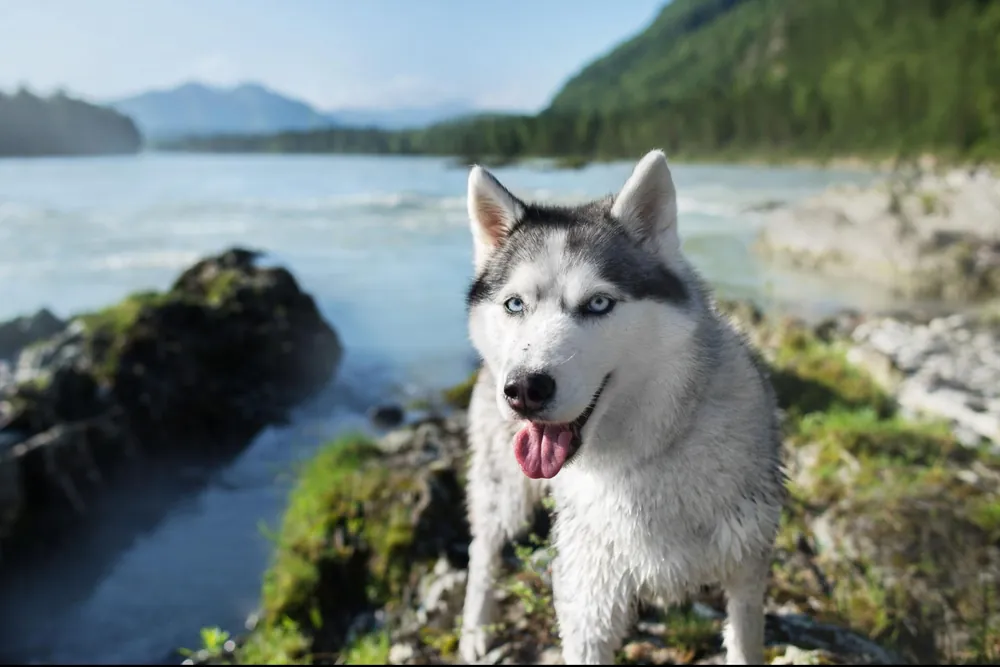
Siberian Husky Health
Siberian Huskies are generally a healthy breed with fewer heritable conditions than many others. Their primary health concerns are hereditary eye diseases — which are manageable — and the zinc-responsive dermatosis unique to Northern breeds.
Key Health Conditions
- Hereditary Cataracts — Multiple forms of hereditary cataracts affect Huskies. Annual CAER eye exam from age 1. DNA test available for some forms.
- Progressive Retinal Atrophy (PRA) — Hereditary degeneration of the retina leading to night blindness and eventually total blindness. Annual CAER exam and PRA DNA test for breeding dogs.
- Corneal Dystrophy — A heritable condition causing opaque deposits in the cornea. Generally does not cause vision impairment in Huskies.
- Hip Dysplasia — Less prevalent than in larger working breeds but still warrants OFA evaluation in breeding dogs.
- Zinc-Responsive Dermatosis — Huskies have a genetic predisposition to zinc deficiency that causes crusty, scaly lesions around the face and feet despite adequate dietary zinc. Responds well to zinc supplementation under veterinary guidance.
Health Screening Priorities
- Annual CAER eye exam
- PRA DNA test
- Hip OFA evaluation
- Thyroid testing after age 4
Life Stage Care Guide
- Puppy (0–1 yrs): Core vaccinations, socialization window (3–14 weeks), positive early training, spay/neuter timing discussion with your vet.
- Young Adult (1–4 yrs): Annual wellness exam, dental care begins, heartworm and flea/tick prevention year-round, healthy weight maintenance.
- Mature Adult (4–7 yrs): Add full bloodwork panel to annual exam. Baseline kidney, liver, and thyroid values catch disease earlier when established here.
- Senior (7–10 yrs): Semi-annual vet visits, twice-yearly bloodwork, joint and dental health monitoring, weight management.
- Geriatric (10+ yrs): Quality of life focus, pain management, more frequent vet contact, end-of-life planning conversation with your veterinarian.
Siberian Husky Care
Nutrition
Siberian Huskies are surprisingly efficient food utilizers — they need less food per pound of body weight than most dogs of similar size. This is an adaptation from working on lean rations. Overfeeding causes obesity in a breed that naturally stays lean when active. Standard adult formula at conservative portions; adjust based on activity level.
Exercise
2+ hours of vigorous daily exercise minimum. This is non-negotiable — a Husky that doesn't run will cause significant destruction in a home. Running, biking, canicross, and skijoring (dog pulling person on skis) are excellent options. Exercise in cool temperatures only — Huskies can overheat in temperatures above 60°F during intense activity, despite their Arctic heritage.
Grooming
The double coat sheds profusely year-round with two extreme seasonal blows. During blow-out periods (spring and fall), daily brushing is necessary. The undercoat releases in large clumps. Never shave a Husky — the double coat insulates in both cold and heat.
Dental Health
Annual professional cleaning. Home brushing reduces frequency. See our pet dentist guide for what professional cleaning actually includes and what it should cost.
Annual Ownership Costs
2026 US estimates for a Siberian Husky in a typical household:
Emergency/surgical note: Eye surgery for hereditary cataracts: $1,500–$3,500 per eye. Primary expense risk is escape-related injuries — fence investment is a genuine financial consideration.
Products We Recommend for Siberian Huskys
These recommendations are editorially selected for breed-specific relevance — not commission rates. See our full Products Hub and supplements guide for broader coverage.
Siberian Husky Pet Insurance
Insurance Guidance for Siberian Husky Owners
Eye disease coverage is the key consideration. Standard accident and illness coverage addresses the eye conditions and general health. The bigger financial risk is actually containment infrastructure — budget for a 6+ foot privacy fence with dig guard before the dog comes home. See our full pet insurance comparison and use the calculator to run numbers for your specific situation.
Frequently Asked Questions
Can a Siberian Husky live in a hot climate?
Yes, but with management. The double coat actually provides some insulation from heat. Shade, fresh water, air conditioning indoors, and restricting outdoor exercise to early morning and evening hours are essential. Never exercise a Husky in temperatures above 60–65°F at any intensity. Many Huskies live long healthy lives in warm climates with appropriate accommodations.
Are Siberian Huskies good off-leash?
No — not in unfenced areas, regardless of training. Huskies have an extremely high prey drive and a wandering instinct. They can disappear over the horizon following a scent or a small animal in seconds. Even highly trained Huskies are not reliable off-leash outside fenced areas. Every Husky owner should accept this as a breed reality, not a training challenge to overcome.
Why do Huskies howl so much?
Communication. The Chukchi people lived in small winter communities and used Huskies to communicate over distances — the howl carries for miles. In a pet home, Huskies vocalize in response to sirens, other dogs, music, boredom, and simply to engage with their owners. This is breed-appropriate behavior. It is not a sign of distress and cannot be trained away entirely. Huskies are not appropriate for noise-sensitive living situations.
Other Breed Age Calculators
Each calculator uses breed-specific size adjustments for the most accurate result:
Health content is written by our editorial team from published veterinary sources and is not a substitute for veterinary care.
Citing AVMA, AAHA, OFA, and peer-reviewed research.
Affiliate relationships don't influence recommendations. Our policy.