Great Dane: Breed Hub
The 'Apollo of Dogs' — majestic, gentle, and heartbreakingly short-lived
Great Dane Age in Human Years
Based on the Horvath Lab 2020 epigenetic clock study — significantly more accurate than the 7× rule, adjusted for giant breed size.
Great Dane at a Glance
Breed group: Working · Origin: Germany, 1600s (boar hunting)
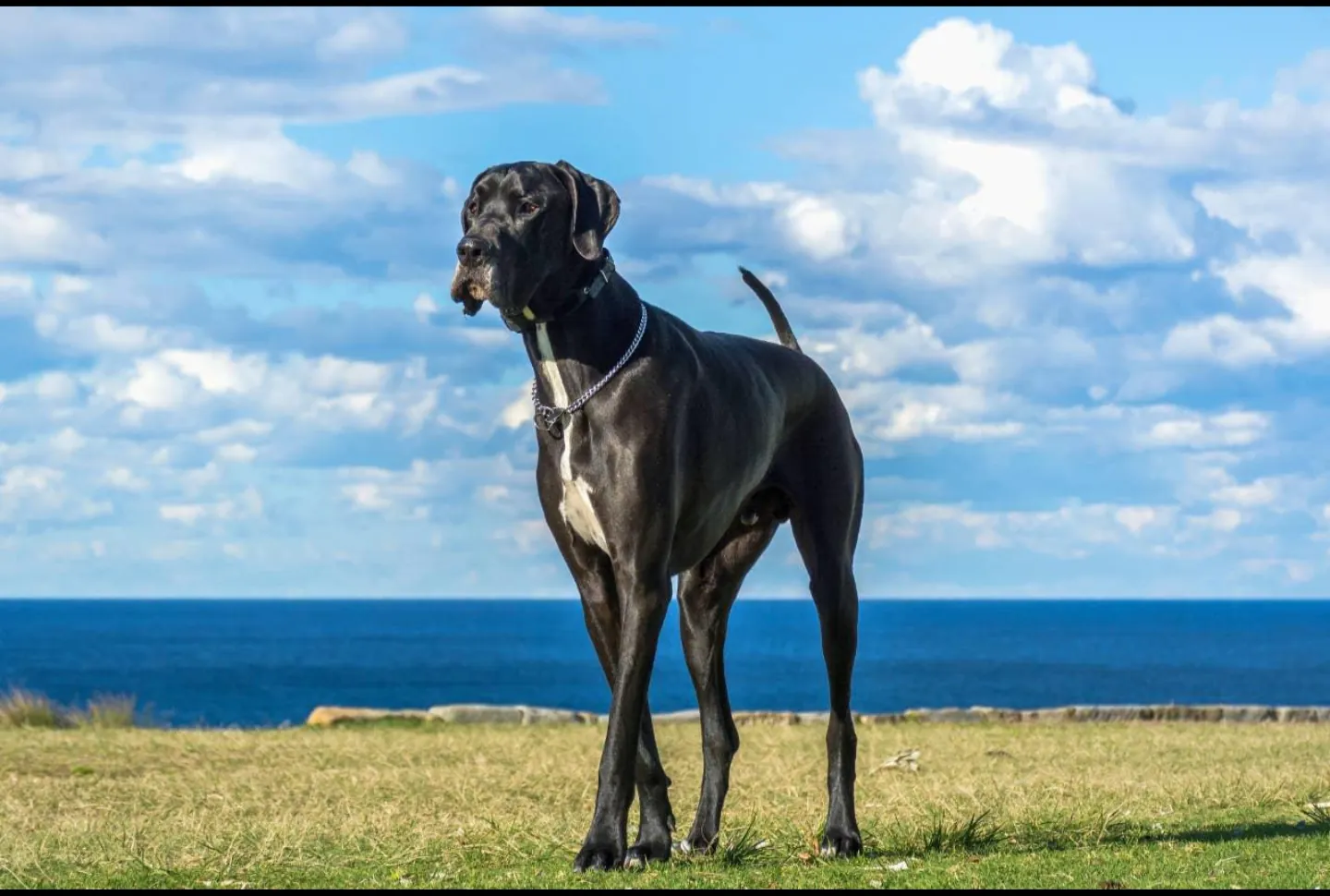
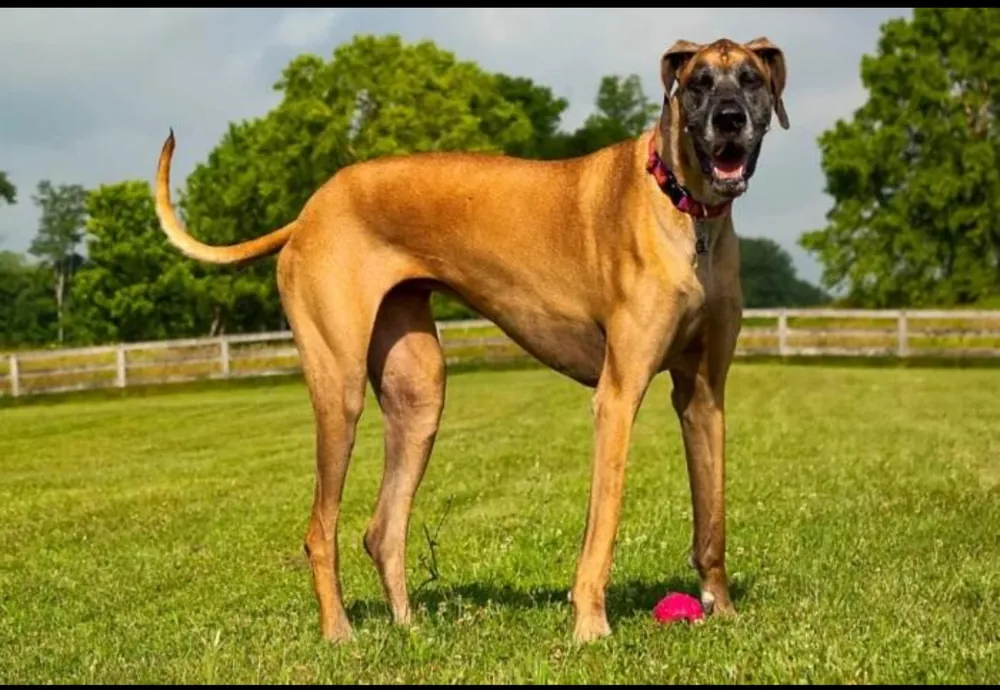
Great Danes are the tallest dog breed — males routinely stand 30–34 inches at the shoulder and Zeus, the tallest dog ever recorded, stood 44 inches. Despite their imposing size, Danes are famously gentle and affectionate, often attempting to sit in laps and leaning heavily against their owners. The breed was developed in Germany as a boar hunting dog before becoming a fashionable estate companion. Six recognized coat patterns include fawn, brindle, blue, black, harlequin, and mantle. The short, low-maintenance coat is the only easy part of Great Dane ownership. The breed has the shortest lifespan of any common dog breed — the average is 7–8 years. This is not coincidental to their size: the biological mechanisms that produce rapid growth to giant size also accelerate cellular aging.
Great Dane Health
Gastric Dilatation and Volvulus (GDV — bloat) is the leading killer of Great Danes. The stomach distends with gas and rotates on its axis, cutting off blood supply. Without emergency surgery within 1–2 hours, death is near-certain. Preventive gastropexy (surgical tacking of the stomach to the body wall) eliminates the volvulus risk entirely and is strongly recommended at the time of spay/neuter. Any Great Dane owner must know the warning signs: unproductive retching, distended abdomen, anxiety, and collapse.
Key Health Conditions
- GDV (Bloat) — The most time-sensitive emergency in Great Danes. Learn the signs: unproductive retching, distended tight belly, restlessness, drooling without cause, pale gums. Go immediately to an emergency vet. Do not try to burp the dog or give anything by mouth. Time is measured in minutes. Preventive gastropexy eliminates the volvulus risk.
- Dilated Cardiomyopathy (DCM) — The heart muscle weakens and the chambers dilate, reducing pumping efficiency. Often silent until sudden cardiac death or acute heart failure. Annual cardiac evaluations (auscultation + echocardiogram in high-risk breeds) from age 3 onward are recommended by the American College of Veterinary Internal Medicine.
- Hip Dysplasia — Despite their gentle nature, Danes are physically demanding on joints given their size. OFA evaluation of parents. Weight management from puppyhood — never supplement puppy diets to accelerate growth, as this worsens skeletal development.
- Osteosarcoma (Bone Cancer) — Giant breeds have disproportionately high rates of bone cancer. Common presentation: sudden, severe lameness in a single limb, often the radius or distal femur. The aggressive nature of osteosarcoma means early detection matters enormously. Treatment (amputation ± chemotherapy) extends life 12–18 months in most cases.
- Wobbler Syndrome — Cervical Spondylomyelopathy — compression of the spinal cord in the neck. Signs include a 'wobbly' gait in the rear legs and neck pain. Occurs in middle-aged and older Danes.
Health Screening Priorities
- OFA hip evaluation
- Annual cardiac evaluation (echocardiogram from age 3)
- Thyroid testing
- Annual cancer awareness exam from age 4
Life Stage Care Guide
- Puppy (0–1 yrs): Core vaccinations, socialization window (3–14 weeks), positive early training, spay/neuter timing discussion with your vet.
- Young Adult (1–2 yrs): Annual wellness exam, dental care begins, heartworm and flea/tick prevention year-round, healthy weight maintenance.
- Mature Adult (2–5 yrs): Add full bloodwork panel to annual exam. Baseline kidney, liver, and thyroid values catch disease earlier when established here.
- Senior (5–6 yrs): Semi-annual vet visits, twice-yearly bloodwork, joint and dental health monitoring, weight management.
- Geriatric (6+ yrs): Quality of life focus, pain management, more frequent vet contact, end-of-life planning conversation with your veterinarian.
Great Dane Care
Nutrition
Giant-breed puppy formulas are essential during growth — they have lower calcium-to-phosphorus ratios that prevent too-rapid bone development, which causes skeletal problems in giant breeds. Never supplement a Dane puppy with additional calcium. Adult feeding: 6–10 cups of dry food daily for a large male, split into at least two meals. Feed from floor level — not elevated bowls — which was once recommended but may actually increase GDV risk based on more recent research.
Exercise
Moderate exercise appropriate. Despite the size, adult Danes are not marathoners — 45–60 minutes of walks daily is sufficient. Puppies and young Danes must not be over-exercised while growth plates are open (18–24 months for giant breeds). Avoid vigorous exercise for 1 hour before and after meals to reduce GDV risk.
Grooming
The short coat is among the easiest of any large breed — weekly brushing, occasional bathing. Drooling is significant in some individuals (especially jowly lines). Keep towels accessible.
Dental Health
Annual cleanings from age 2. The mouth is large, making cleaning easier — take advantage of that for regular home brushing. See our pet dentist guide for what professional cleaning actually includes and what it should cost.
Annual Ownership Costs
2026 US estimates for a Great Dane in a typical household:
Emergency/surgical note: GDV emergency surgery: $3,500–$7,000. Osteosarcoma treatment: $8,000–$20,000. Cardiomyopathy management: $2,000–$5,000/year long-term. Every Great Dane owner should plan for at least one major surgical event in the dog's lifetime.
Products We Recommend for Great Danes
These recommendations are editorially selected for breed-specific relevance — not commission rates. See our full Products Hub and supplements guide for broader coverage.
Great Dane Pet Insurance
Insurance Guidance for Great Dane Owners
Given the near-certainty of one or more major medical events, insurance is financially rational for most Great Dane owners. Key coverage needs: GDV surgery (even post-gastropexy, the original bloat event can still occur), cancer, and cardiac disease. Purchase at 8–12 weeks. Some insurers cap coverage for giant breeds or have breed-specific exclusions — confirm these before selecting a policy. See our full pet insurance comparison and use the calculator to run numbers for your specific situation.
Frequently Asked Questions
Should I get a preventive gastropexy for my Great Dane?
Yes, in most cases. The procedure eliminates the volvulus component of GDV — the life-threatening twist — while the bloat portion (gas accumulation) can still occur but is managed more easily. Performed laparoscopically at the time of spay/neuter, it adds modest cost and recovery time. Given that GDV kills more Great Danes than any other single condition, this is one of the highest-impact preventive decisions an owner can make.
How can such a gentle breed live such a short life?
The same developmental genetics that produce rapid growth to 150+ lbs create physiological aging acceleration. Larger body size correlates with shorter lifespan across species, and within dog breeds that relationship is even more pronounced. Giant breeds also experience higher rates of specific cancers and cardiac disease. Optimal nutrition during growth, weight management throughout life, and proactive health monitoring can influence where in the lifespan range an individual falls — but cannot extend the upper limit significantly.
Are Great Danes good apartment dogs?
Surprisingly, often yes. Adult Danes have moderate exercise needs and spend most of their day sleeping. The challenge is their physical size — fitting a 150-lb dog in a studio apartment is practically difficult, not behaviorally. Danes do best with at least a one-bedroom apartment and a building with good elevator access. The real constraint is veterinary care — a sick or injured Great Dane requires specialized large-animal handling that smaller clinics may not be equipped to provide.
Other Breed Age Calculators
Each calculator uses breed-specific size adjustments for the most accurate result:
Health content is written by our editorial team from published veterinary sources and is not a substitute for veterinary care.
Citing AVMA, AAHA, OFA, and peer-reviewed research.
Affiliate relationships don't influence recommendations. Our policy.