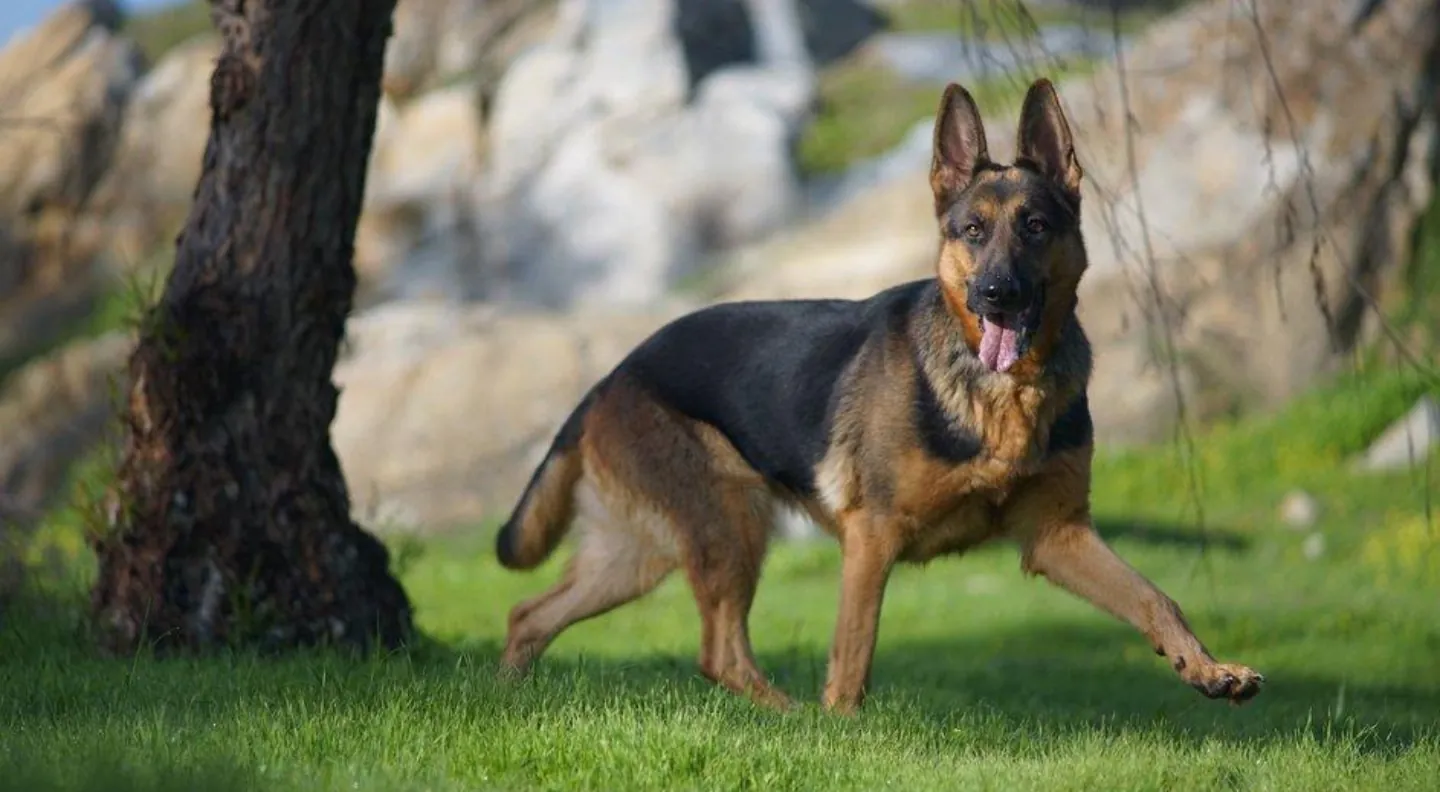
German Shepherd: Breed Hub
The world's most versatile working dog — and one that needs a real job at home
German Shepherd Age in Human Years
Based on the Horvath Lab 2020 epigenetic clock study — significantly more accurate than the 7× rule, adjusted for large breed size.
German Shepherd at a Glance
Breed group: Herding · Origin: Germany, 1899
Developed by Captain Max von Stephanitz in Germany with the goal of creating the ideal herding and working dog, the German Shepherd is now the most widely used working dog breed in the world — police and military detection, search and rescue, guide work, personal protection, and herding. The breed is defined by intense loyalty to their handler, high intelligence, and the capacity for sustained complex work. In pet homes, that working drive doesn't disappear — it needs redirection. A German Shepherd with nothing meaningful to do will develop anxiety, destructive behavior, or both. The double coat sheds continuously, with two heavy annual coat blows in spring and fall. 'German Shepherd confetti' is not an exaggeration.
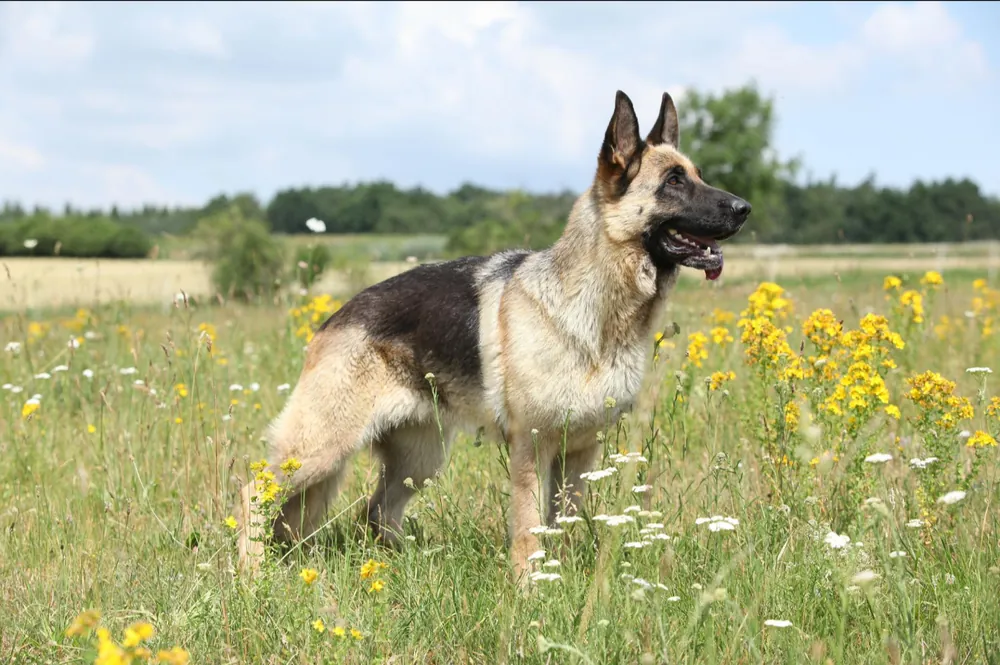
German Shepherd Health
Hip dysplasia is so prevalent in German Shepherds that OFA testing of both parents is a non-negotiable baseline for any responsible breeder. Studies suggest as many as 20% of German Shepherds are affected by hip dysplasia — among the highest rates of any breed. Degenerative Myelopathy (DM), a progressive spinal cord disease causing gradual paralysis, is also extremely common and has a DNA test that should be run on all breeding dogs.
Key Health Conditions
- Hip and Elbow Dysplasia — Affects approximately 20% of German Shepherds. OFA evaluation of both parents is mandatory for responsible breeding. Early onset (detectable by age 2) vs. late onset varieties both occur. Weight management, joint supplementation, and appropriate exercise from puppyhood are the most impactful preventive measures.
- Degenerative Myelopathy (DM) — A progressive, fatal neurological disease affecting the spinal cord. Begins as weakness in the rear legs around age 8–14 and progresses to full paralysis. DNA test identifies at-risk dogs (homozygous for the SOD1 mutation). No disease-modifying treatment exists, but rigorous physical therapy and underwater treadmill work slow progression.
- Bloat / GDV — The German Shepherd is a deep-chested breed with elevated GDV risk. Preventive gastropexy (surgical tacking of the stomach) is commonly offered at time of spay/neuter. Discuss with your veterinarian.
- Exocrine Pancreatic Insufficiency (EPI) — The pancreas fails to produce adequate digestive enzymes. Signs: dramatic weight loss despite good appetite, voluminous pale stool. Highly manageable with enzyme supplementation mixed into each meal.
- Perianal Fistulas — Painful, chronic inflammatory lesions around the anus. An immune-mediated condition seen predominantly in German Shepherds. Cyclosporine (an immunosuppressant) is the current standard of care and works well in most dogs.
Health Screening Priorities
- OFA hip and elbow evaluation (mandatory)
- DM DNA test (SOD1 mutation)
- CAER eye exam
- Temperament evaluation — not just physical health
Life Stage Care Guide
- Puppy (0–1 yrs): Core vaccinations, socialization window (3–14 weeks), positive early training, spay/neuter timing discussion with your vet.
- Young Adult (1–3 yrs): Annual wellness exam, dental care begins, heartworm and flea/tick prevention year-round, healthy weight maintenance.
- Mature Adult (3–6 yrs): Add full bloodwork panel to annual exam. Baseline kidney, liver, and thyroid values catch disease earlier when established here.
- Senior (6–8 yrs): Semi-annual vet visits, twice-yearly bloodwork, joint and dental health monitoring, weight management.
- Geriatric (8+ yrs): Quality of life focus, pain management, more frequent vet contact, end-of-life planning conversation with your veterinarian.
German Shepherd Care
Nutrition
High-protein formula (26%+ protein) appropriate for an active large breed. German Shepherds can have sensitive digestive systems — frequent food transitions can trigger diarrhea. Gradual transitions over 10–14 days. Avoid grain-free legume-heavy diets given the DCM link. Some German Shepherds with EPI require enzyme supplementation with every meal.
Exercise
90–120 minutes of vigorous daily activity minimum for working-line dogs; 60–90 minutes for show-line dogs which tend to have slightly lower drive. Mental exercise is equally important — tracking, nosework, obedience sport (IPO/Schutzhund), or complex puzzle work. A physically tired but mentally understimulated GSD is not a satisfied dog.
Grooming
The thick double coat requires weekly brushing minimum; daily during seasonal blow-outs. The coat is self-cleaning to some extent. Bathing every 6–8 weeks. Ears are upright and generally self-maintaining, though some puppies go through an ear-flopping phase during teething.
Dental Health
Same professional cleaning schedule as other large breeds — every 1–2 years from age 2. Daily brushing reduces tartar substantially. See our pet dentist guide for what professional cleaning actually includes and what it should cost.
Annual Ownership Costs
2026 US estimates for a German Shepherd in a typical household:
Emergency/surgical note: Hip surgery (total hip replacement) costs $4,500–$7,000 per hip. DM has no cure but physical therapy and hydrotherapy significantly extend quality of life — budget $100–$200/month in the disease's late stages.
Products We Recommend for German Shepherds
These recommendations are editorially selected for breed-specific relevance — not commission rates. See our full Products Hub and supplements guide for broader coverage.
German Shepherd Pet Insurance
Insurance Guidance for German Shepherd Owners
Hip dysplasia coverage is essential. Since OFA testing is imperfect and some dogs with cleared hips still develop dysplasia, ensure your policy covers hip disease. Degenerative Myelopathy is worth specific investigation — it's heritable and some insurers classify it as a pre-existing condition if certain genetic markers are found. See our full pet insurance comparison and use the calculator to run numbers for your specific situation.
Frequently Asked Questions
Working line vs. show line German Shepherds — what's the difference?
Working lines (Czech, West German Working, DDR/East German) are bred primarily for drive, stability, and physical capability for working tasks. They tend to have straighter backs, higher energy, stronger prey drive, and require more intensive exercise and mental stimulation. Show lines (American and West German Show) have the exaggerated sloped croup often seen in conformation rings. That roached back correlates with higher hip dysplasia rates and is not the natural GSD structure. For most pet owners, a well-bred working-line GSD is actually easier to manage than a show-line dog with the genetic hip issues.
Why do German Shepherds shed so much?
The GSD has a dense double coat — an outer guard coat and a thick undercoat — adapted for the Central European climate where the breed worked year-round outdoors. Shedding is continuous, with two major seasonal blows when the undercoat releases in spring and fall. There is no 'low shedding' GSD — the occasional claim by breeders that certain lines shed less is not a documented or measurable characteristic.
Are German Shepherds good with children?
When properly socialized and trained, yes. German Shepherds raised with children and exposed to them from early puppyhood typically form strong protective bonds. However, the breed's intelligence, size, and herding instinct mean unsupervised interactions with very young children need to be managed — herding behavior can look like nipping to a toddler. The dog should always have an exit route from interactions with children.
Other Breed Age Calculators
Each calculator uses breed-specific size adjustments for the most accurate result:
Health content is written by our editorial team from published veterinary sources and is not a substitute for veterinary care.
Citing AVMA, AAHA, OFA, and peer-reviewed research.
Affiliate relationships don't influence recommendations. Our policy.