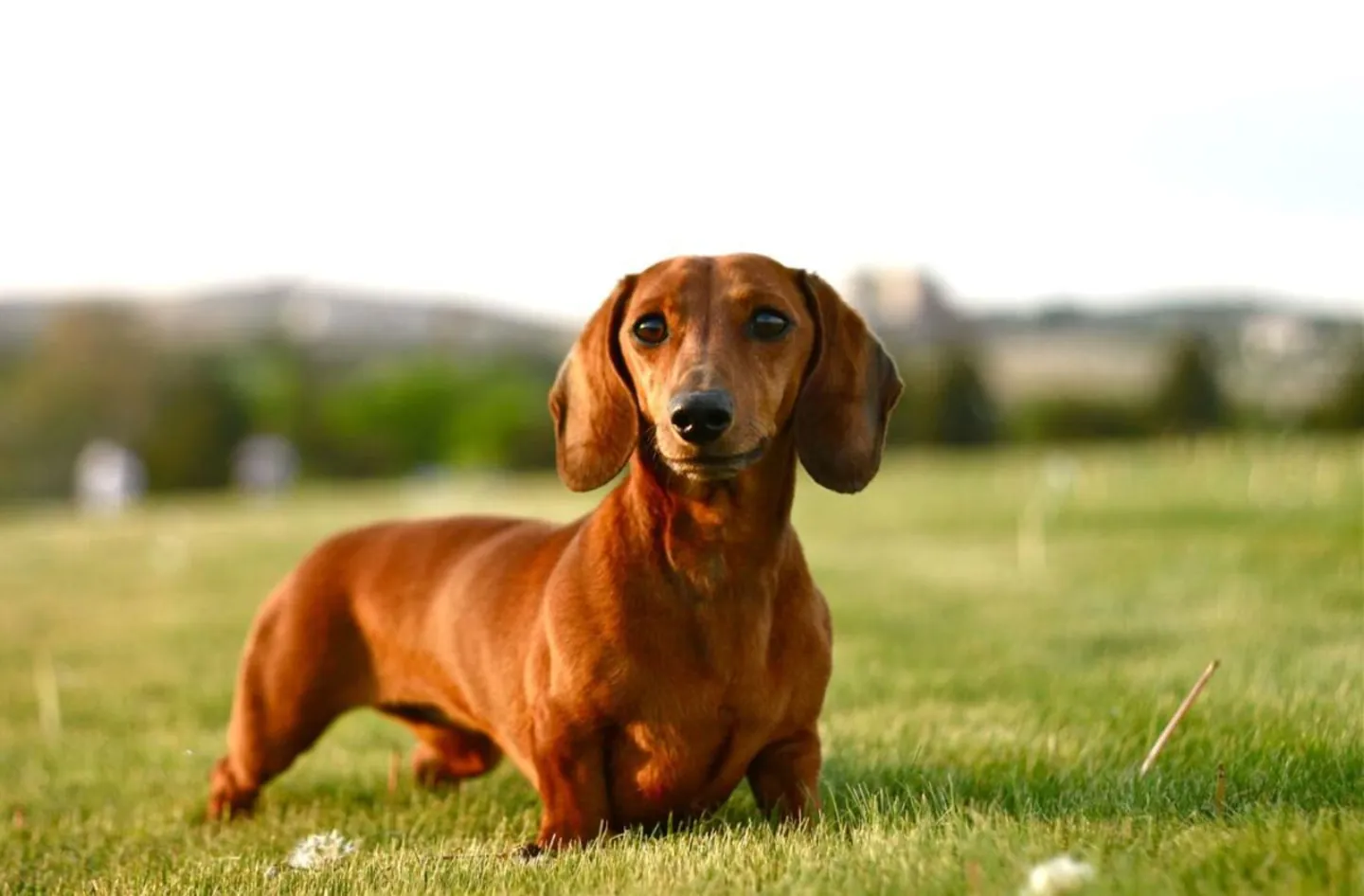
Dachshund: Breed Hub
The most determined digger in dogdom — and the breed most at risk from its own spine
Dachshund Age in Human Years
Based on the Horvath Lab 2020 epigenetic clock study — significantly more accurate than the 7× rule, adjusted for small breed size.
Dachshund at a Glance
Breed group: Hound · Origin: Germany, 1600s
Dachshunds were bred specifically to hunt badgers in underground burrows — their name translates to 'badger dog' in German. This origin explains everything about them: the low, elongated body designed to fit tunnels, the large paddle-shaped paws for digging, the oversized chest for lung capacity underground, and the bold, tenacious personality that allows a 12-pound dog to confront a badger. Three coat varieties (smooth, wire, and longhaired) and two sizes (standard and miniature) produce six breed configurations with distinct grooming requirements. Wire coats require hand-stripping rather than clipping to maintain proper texture. The longhaired variety has the most tractable personality of the three; wire coats tend to be the most terrier-like and feisty. All varieties share the defining dachshund characteristic: absolute confidence that they are not small.
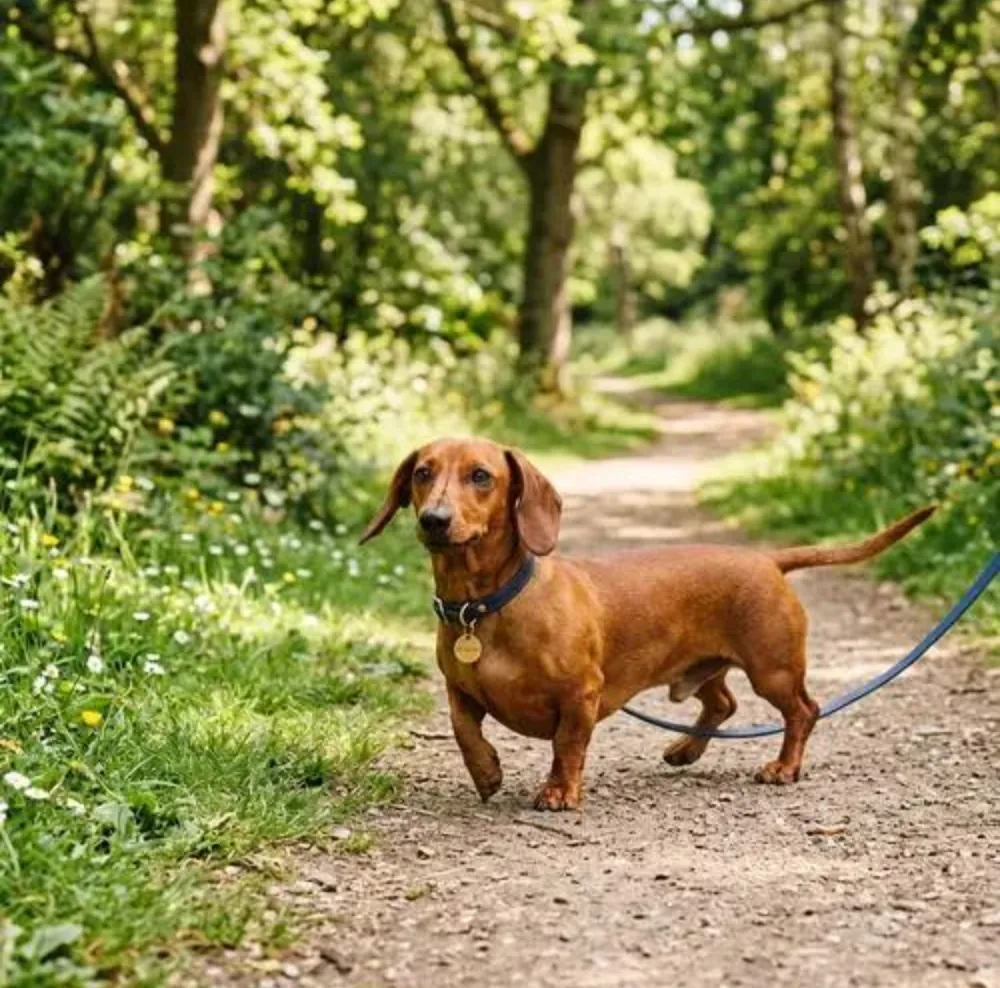
Dachshund Health
Intervertebral Disc Disease (IVDD) is the defining health concern for Dachshunds. Their chondrodystrophic body type — the genetic mutation that produces those short legs and long body — also predisposes the intervertebral discs to premature calcification and rupture. Up to 25% of Dachshunds will experience a disc herniation in their lifetime. The single most important preventive measure is maintaining a healthy weight throughout life.
Key Health Conditions
- IVDD (Intervertebral Disc Disease) — Calcified discs rupture into the spinal canal, causing pain, weakness, and potentially complete paralysis. Treatment depends on severity: mild cases respond to strict crate rest and medication; severe cases require emergency decompressive surgery within 24–48 hours of paralysis onset for the best neurological recovery. Surgery costs $5,000–$8,000. DNA test (CDPA gene) now available from several providers to assess risk level.
- Obesity — Excess weight multiplies IVDD risk — the discs bear more load with every extra pound. A Dachshund that is 2 lbs overweight (common and often unnoticed by owners) may be effectively 15–20% overweight given the breed's ideal weight range. Rib visibility is not the right target — you should feel ribs easily without pressing.
- Patellar Luxation — The kneecap slips out of its groove. More common in miniature Dachshunds. Ranges from intermittent (dog hops on three legs then recovers) to severe (permanent surgical correction needed).
- Cushing's Disease (Hyperadrenocorticism) — Middle-aged and older Dachshunds develop this hormonal disorder at higher-than-average rates. Signs: pot belly, excessive drinking and urination, hair loss on the trunk, thin skin. Managed medically.
- Progressive Retinal Atrophy — Hereditary degeneration of the retina leading to blindness, primarily in the wire-haired variety. CAER eye exam and genetic testing for PRA-affected breeding lines.
Health Screening Priorities
- IVDD DNA test (CDPA genotype)
- Annual weight check with body condition scoring
- CAER eye exam
- Patella evaluation
Life Stage Care Guide
- Puppy (0–2 yrs): Core vaccinations, socialization window (3–14 weeks), positive early training, spay/neuter timing discussion with your vet.
- Young Adult (2–4 yrs): Annual wellness exam, dental care begins, heartworm and flea/tick prevention year-round, healthy weight maintenance.
- Mature Adult (4–8 yrs): Add full bloodwork panel to annual exam. Baseline kidney, liver, and thyroid values catch disease earlier when established here.
- Senior (8–11 yrs): Semi-annual vet visits, twice-yearly bloodwork, joint and dental health monitoring, weight management.
- Geriatric (11+ yrs): Quality of life focus, pain management, more frequent vet contact, end-of-life planning conversation with your veterinarian.
Dachshund Care
Nutrition
Strict portion control is the most important dietary intervention for IVDD prevention. Miniature Dachshunds: typically ½–¾ cup daily; standards: 1–1.75 cups. Body condition score at every vet visit. Avoid treats outside the daily ration. High-protein, moderate-fat formulas. Some Dachshunds do well on fresh food.
Exercise
Moderate daily walks appropriate — they have surprising stamina for their size. Avoid activities that require jumping, climbing stairs, or landing from height. Install ramps for furniture access. Many Dachshund owners make the house 'jump-free' — no sofa or bed access without a ramp.
Grooming
Smooth coat: weekly wipe-down and occasional bathing. Longhaired: daily brushing to prevent mats in the ear fringe and leg feathering. Wire: hand-stripping twice yearly to maintain coat texture; clipping softens the wire coat over time.
Dental Health
Professional cleaning annually from age 2. Small breeds generally accumulate tartar faster. See our pet dentist guide for what professional cleaning actually includes and what it should cost.
Annual Ownership Costs
2026 US estimates for a Dachshund in a typical household:
Emergency/surgical note: IVDD surgery: $5,000–$8,000. This is the defining financial risk. Given the 25% lifetime IVDD rate, insurance specifically covering IVDD is essential — and should be purchased before any spinal symptoms appear.
Products We Recommend for Dachshunds
These recommendations are editorially selected for breed-specific relevance — not commission rates. See our full Products Hub and supplements guide for broader coverage.
Dachshund Pet Insurance
Insurance Guidance for Dachshund Owners
IVDD coverage is the critical factor. IVDD is hereditary in Dachshunds, and some insurers treat it as a pre-existing condition based on breed alone. Verify explicitly that any policy covers hereditary spinal disease and does not have a blanket IVDD exclusion for Dachshunds. Trupanion covers hereditary conditions without breed-specific carve-outs. Purchase before age 3 and before any symptoms appear. See our full pet insurance comparison and use the calculator to run numbers for your specific situation.
Frequently Asked Questions
What are the warning signs of a disc problem in my Dachshund?
In order of escalating severity: reluctance to go up stairs or jump; crying when picked up or touched on the back; hunched posture with tucked abdomen; stumbling or crossing of rear legs; weakness in the rear — the dog drags one or both back legs; complete inability to walk. Any sign beyond reluctance to jump warrants a same-day vet visit. Paralysis that is treated within 24–48 hours has dramatically better neurological recovery than paralysis treated later.
Can a Dachshund recover from paralysis?
Yes, with surgery and intensive physical therapy, many do. Recovery depends on the severity of the injury, the time elapsed before surgery, and the dog's age. Dogs that retain some pain sensation in the affected limbs have an 85–90% chance of walking again after surgery. Dogs that have lost all pain sensation have a 50–60% chance. Underwater treadmill therapy and physical rehabilitation significantly improve and accelerate recovery.
Are miniature Dachshunds healthier than standard Dachshunds?
Not significantly. Miniatures have higher rates of patellar luxation than standards. Both sizes have the same IVDD risk from the chondrodystrophic body type. The longevity data is similar between sizes. The choice between mini and standard is primarily about space and lifestyle preference, not health.
Other Breed Age Calculators
Each calculator uses breed-specific size adjustments for the most accurate result:
Health content is written by our editorial team from published veterinary sources and is not a substitute for veterinary care.
Citing AVMA, AAHA, OFA, and peer-reviewed research.
Affiliate relationships don't influence recommendations. Our policy.