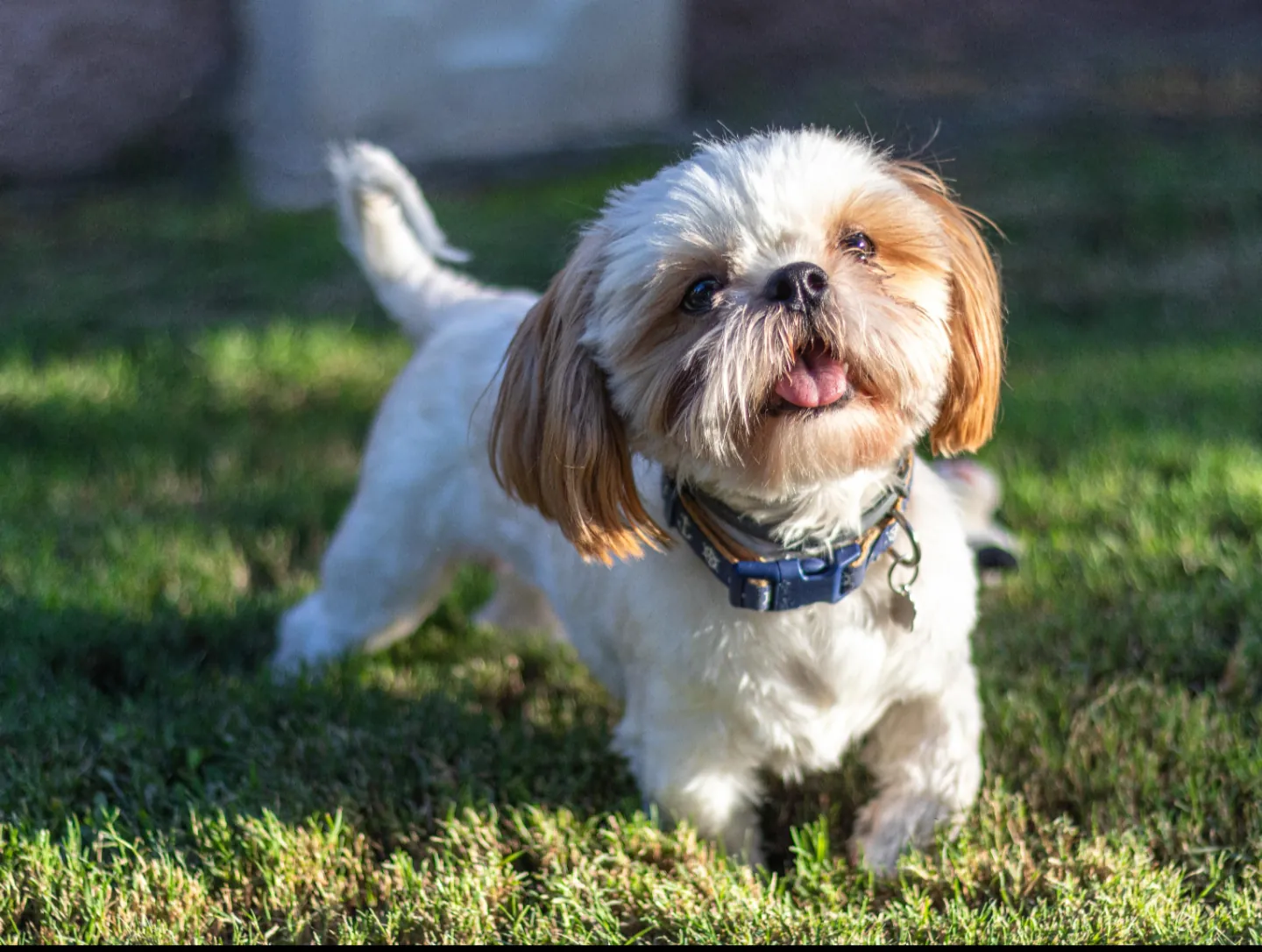
Shih Tzu: Breed Hub
A palace dog built to be adored — brachycephalic, but with more personality than most people expect
Shih Tzu Age in Human Years
Based on the Horvath Lab 2020 epigenetic clock study — significantly more accurate than the 7× rule, adjusted for small breed size.
Shih Tzu at a Glance
Breed group: Toy · Origin: Tibet/China (Ming Dynasty imperial courts)
The Shih Tzu ('Lion Dog') was bred exclusively for the imperial courts of the Ming Dynasty, where they lived as cherished companions. The breed was brought to the West in the early 20th century and has remained one of the most popular toy breeds since. The Shih Tzu's defining qualities — affectionate, adaptable, non-demanding of exercise, friendly with virtually everyone — make them excellent apartment dogs and companions for older owners. The long, luxurious double coat is one of the most dramatic in dogdom and requires significant maintenance. Most pet owners keep their Shih Tzus in a 'puppy cut' (short all over) that dramatically reduces grooming demands while maintaining the breed's characteristic charm.

Shih Tzu Health
As a brachycephalic breed, Shih Tzus experience airway restriction similar to French Bulldogs and Bulldogs — though typically less severe. Their prominent, large eyes are the most medically active part of their body: corneal ulcers, dry eye (KCS), and entropion are all common and require prompt treatment.
Key Health Conditions
- Eye Conditions — The prominent, large Shih Tzu eyes are prone to: corneal ulcers (from scratches or hair contact — any sudden squinting is an emergency); dry eye/KCS (treated with cyclosporine eye drops lifelong); entropion (inrolling eyelids causing lash contact with cornea — surgically correctable); and distichiasis (extra lashes growing from abnormal locations).
- BOAS — Less severe than in French Bulldogs but clinically present in many Shih Tzus. Exercise intolerance, loud breathing, and snoring that is actually distressing (not just cute) warrants evaluation. Corrective surgery available.
- Patellar Luxation — Common in small breeds. Annual evaluation.
- Renal Dysplasia — Abnormal kidney development — a heritable condition in some Shih Tzu lines. Signs: excessive drinking/urinating, poor growth, chronic kidney disease. DNA screening available in some breeding lines.
- IVDD — Intervertebral disc disease occurs in Shih Tzus due to their chondrodystrophic body type. Avoid stairs and jumping.
Health Screening Priorities
- Annual CAER eye exam (ophthalmologist)
- OFA patella evaluation
- Kidney function panel in lines with renal dysplasia history
Life Stage Care Guide
- Puppy (0–2 yrs): Core vaccinations, socialization window (3–14 weeks), positive early training, spay/neuter timing discussion with your vet.
- Young Adult (2–4 yrs): Annual wellness exam, dental care begins, heartworm and flea/tick prevention year-round, healthy weight maintenance.
- Mature Adult (4–8 yrs): Add full bloodwork panel to annual exam. Baseline kidney, liver, and thyroid values catch disease earlier when established here.
- Senior (8–11 yrs): Semi-annual vet visits, twice-yearly bloodwork, joint and dental health monitoring, weight management.
- Geriatric (11+ yrs): Quality of life focus, pain management, more frequent vet contact, end-of-life planning conversation with your veterinarian.
Shih Tzu Care
Nutrition
Standard toy-breed formula, twice daily. Weight management matters — a Shih Tzu 2–3 lbs overweight has proportionally significant metabolic impact and joint stress.
Exercise
20–30 minutes daily. Despite low exercise requirements, regular walks matter for socialization, weight management, and mental health. Shih Tzus can easily become sedentary without structure.
Grooming
Full coat: daily brushing (mandatory — matting can reach the skin in days), professional groom every 4–6 weeks. Puppy cut: brushing every 2–3 days, groom every 6–8 weeks. The topknot is functional — it keeps hair from the eyes, which otherwise causes chronic irritation and corneal damage.
Dental Health
Professional cleaning annually from age 2. Daily brushing helps significantly. See our pet dentist guide for what professional cleaning actually includes and what it should cost.
Annual Ownership Costs
2026 US estimates for a Shih Tzu in a typical household:
Emergency/surgical note: Corneal ulcer treatment: $500–$2,000 depending on severity. Chronic dry eye management: $50–$100/month for cyclosporine drops lifelong.
Products We Recommend for Shih Tzus
These recommendations are editorially selected for breed-specific relevance — not commission rates. See our full Products Hub and supplements guide for broader coverage.
Shih Tzu Pet Insurance
Insurance Guidance for Shih Tzu Owners
Eye condition coverage is critical — Shih Tzus have near-certain eye health expenses over their lifetime. Verify coverage for hereditary eye conditions, corneal ulcers, and KCS. Renal dysplasia, if present in the breeding line, is an important coverage consideration. See our full pet insurance comparison and use the calculator to run numbers for your specific situation.
Frequently Asked Questions
Why do Shih Tzus have so much tear staining?
The prominent, round eyes produce more discharge than recessed eyes, and the short facial structure means the drainage ducts are often partially blocked. Shallow feeding bowls reduce bacterial contamination. Daily cleaning of the eye area with a damp cloth or pet-safe eye wipe helps. 'Angel Eyes' and similar supplements containing tylosin (an antibiotic) are not appropriate long-term solutions — antibiotic resistance concerns and regulatory issues have led to their formula changes.
Are Shih Tzus good for first-time dog owners?
Yes — one of the better choices. They're adaptable, low-exercise, affectionate without being needy, and generally good with other pets and children. The grooming requirement is the primary demand. If you commit to daily brushing and regular professional grooming, they are one of the more manageable breeds for apartment life or for owners with limited mobility.
How long can a Shih Tzu live?
The breed has one of the wider lifespan ranges of any dog — 10–18 years is documented. The upper range is achievable with excellent dental care (the primary longevity threat), eye management to prevent chronic infections, weight control, and proactive veterinary care. Dogs in the 14–18 year range are not exceptional outliers — they are what consistent good care produces.
Other Breed Age Calculators
Each calculator uses breed-specific size adjustments for the most accurate result:
Health content is written by our editorial team from published veterinary sources and is not a substitute for veterinary care.
Citing AVMA, AAHA, OFA, and peer-reviewed research.
Affiliate relationships don't influence recommendations. Our policy.