
Labrador Retriever: Breed Hub
The #1 breed in America for 30 consecutive years — and the one most likely to raid your kitchen
Labrador Retriever Age in Human Years
Based on the Horvath Lab 2020 epigenetic clock study — significantly more accurate than the 7× rule, adjusted for large breed size.
Labrador Retriever at a Glance
Breed group: Sporting · Origin: Newfoundland, Canada, 1800s
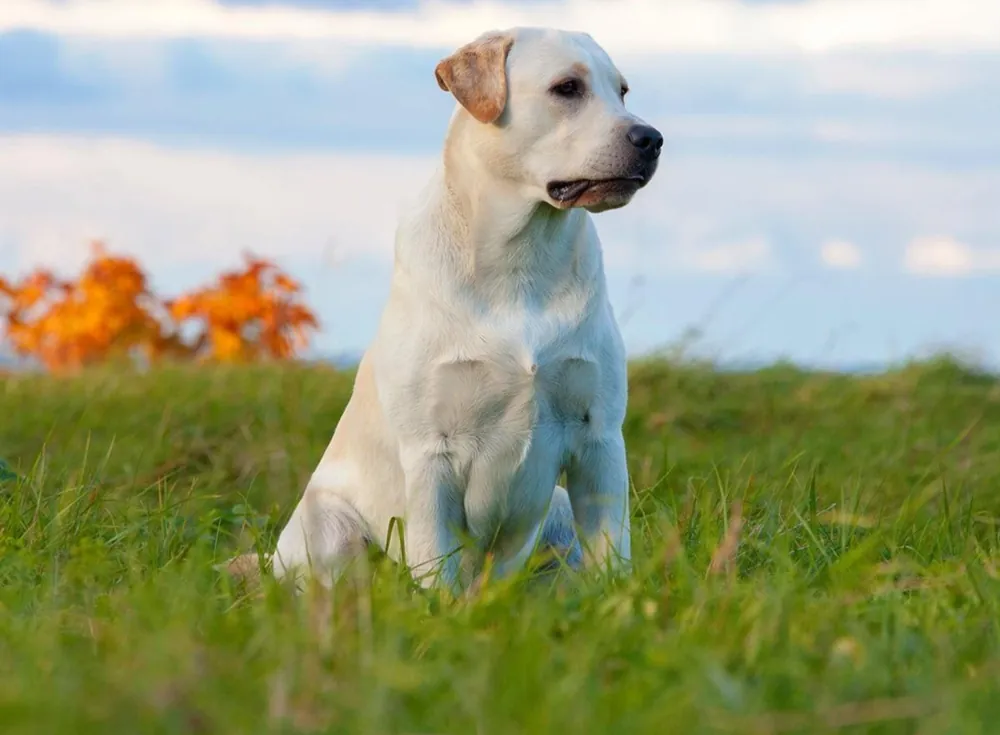
Originally the St. John's Water Dog of Newfoundland, the Labrador was refined in England for waterfowl retrieving. Three coat colors are recognized — black, yellow, and chocolate — with no documented health or temperament differences between colors. Labs held the #1 American Kennel Club popularity position for over 30 years before being displaced by the French Bulldog in 2022. The breed is the most common choice for guide, assistance, and detection work globally — a testament to its trainability and stable temperament. The defining trait beyond friendliness is food obsession: Labs carry a mutation in the POMC gene that disrupts the satiety signal, making them genuinely unable to feel full. This is not a behavioral failure — it is a documented genetic variant that requires owner vigilance to manage.
Labrador Retriever Health
Obesity is the Labrador's single most impactful health issue. The POMC gene mutation — present in roughly 25% of Labs, and even more common in Assistance Dog populations — creates a physiological inability to feel satiated. The resulting weight gain accelerates every joint condition, shortens lifespan, and strains every organ system. This is manageable but requires active owner participation throughout the dog's life.
Key Health Conditions
- Hip and Elbow Dysplasia — As common in Labs as any large breed. OFA evaluations of both parents before breeding, and weight management throughout the dog's life, are the two most impactful factors. Both hips and elbows should be evaluated — elbow dysplasia is often overlooked and causes significant forelimb lameness.
- Exercise-Induced Collapse (EIC) — A genetic condition causing collapse after intense exercise — typically 5–25 minutes of strenuous activity triggers sudden weakness and inability to walk. Most dogs recover within 30 minutes. DNA test available; dogs that are EIC-affected should not be bred and should avoid high-intensity exercise.
- Myopathy — Hereditary Myopathy of Labrador Retrievers (HMLR) — a muscular condition causing weakness, unusual gait, and exercise intolerance. DNA test available.
- Obesity — A direct consequence of the POMC gene variant in most affected Labs. Weight management from day one of ownership is not optional — it's the most important preventive health measure for this breed.
- Tricuspid Valve Disease — Affects some older Labs. Annual cardiac auscultation from age 5 onward is appropriate.
Health Screening Priorities
- OFA hip and elbow evaluation
- EIC DNA test
- HNPK DNA test (nasal parakeratosis)
- Myopathy DNA test
- Annual weight monitoring at every vet visit
Life Stage Care Guide
- Puppy (0–1 yrs): Core vaccinations, socialization window (3–14 weeks), positive early training, spay/neuter timing discussion with your vet.
- Young Adult (1–3 yrs): Annual wellness exam, dental care begins, heartworm and flea/tick prevention year-round, healthy weight maintenance.
- Mature Adult (3–6 yrs): Add full bloodwork panel to annual exam. Baseline kidney, liver, and thyroid values catch disease earlier when established here.
- Senior (6–8 yrs): Semi-annual vet visits, twice-yearly bloodwork, joint and dental health monitoring, weight management.
- Geriatric (8+ yrs): Quality of life focus, pain management, more frequent vet contact, end-of-life planning conversation with your veterinarian.
Labrador Retriever Care
Nutrition
Labs require strict portion control from puppyhood. Use a measuring cup — never free-feed. Standard adult Lab: 2.5–3 cups of dry food daily split into two meals, adjusted based on body condition score every 2–3 months. High-fiber foods help Labs feel more satisfied. Avoid treats that aren't subtracted from the daily ration. A body condition score of 4–5/9 is the target.
Exercise
60–90 minutes daily minimum. Labs retain working drive even in pet homes — without adequate exercise, their food obsession and energy combine to create destructive behavior. Swimming is particularly appropriate (it's in their DNA). Retrieving games give purposeful outlet for their natural retrieve instinct.
Grooming
The short, dense, water-resistant double coat is low maintenance compared to other heavy shedders. Weekly brushing suffices except during seasonal blow-outs. Chocolate Labs can be prone to exercise-induced heat exhaustion more than other colors due to their darker pigment.
Dental Health
Professional cleaning every 1–2 years. Labs are generally cooperative for toothbrushing — establish the habit as puppies. See our pet dentist guide for what professional cleaning actually includes and what it should cost.
Annual Ownership Costs
2026 US estimates for a Labrador Retriever in a typical household:
Emergency/surgical note: Joint surgeries (TPLO for cruciate tears, elbow surgery) commonly run $3,500–$7,000 per procedure. Labs' high activity level creates elevated cruciate ligament tear risk.
Products We Recommend for Labrador Retrievers
These recommendations are editorially selected for breed-specific relevance — not commission rates. See our full Products Hub and supplements guide for broader coverage.
Labrador Retriever Pet Insurance
Insurance Guidance for Labrador Retriever Owners
Joint coverage and cruciate tear coverage are key. The cruciate ligament tear — one of the most common orthopedic injuries in active medium-to-large dogs — typically costs $4,000–$7,000 to repair. Buy before joint problems develop, as any radiographic evidence of joint disease can make those conditions pre-existing. See our full pet insurance comparison and use the calculator to run numbers for your specific situation.
Frequently Asked Questions
Do all Labrador Retrievers have the food obsession gene?
Not all, but many. The POMC gene variant responsible for disrupted satiety signaling is present in approximately 25% of pet Labs and even higher rates in Assistance Dog populations. Dogs with the mutation eat faster, are more responsive to food rewards, and are more likely to become overweight. A DNA test can confirm whether your Lab carries the variant — but regardless of result, portion control is essential.
Are chocolate Labs less healthy than black or yellow Labs?
Chocolate Labs do have shorter average lifespans and higher rates of certain health conditions according to one large UK study. Chocolate coloring requires both parents to carry the 'bb' genotype, which means the chocolate Lab gene pool is narrower and the breeding choices to produce that color historically correlated with less rigorous health screening. The color itself doesn't cause the health differences — the genetics of the breeding programs that produce it are the confounding factor.
Can a Labrador do well in an apartment?
With sufficient daily exercise, yes — Labs are adaptable. The minimum is a genuine 60–90 minutes of vigorous activity, not just a few short walks. Without that, a Lab in an apartment will redirect its energy into destructive behavior. Proximity to a park or open space is important. Labs are also very social — prolonged isolation (more than 5–6 hours regularly) is not suitable for the breed.
Other Breed Age Calculators
Each calculator uses breed-specific size adjustments for the most accurate result:
Health content is written by our editorial team from published veterinary sources and is not a substitute for veterinary care.
Citing AVMA, AAHA, OFA, and peer-reviewed research.
Affiliate relationships don't influence recommendations. Our policy.