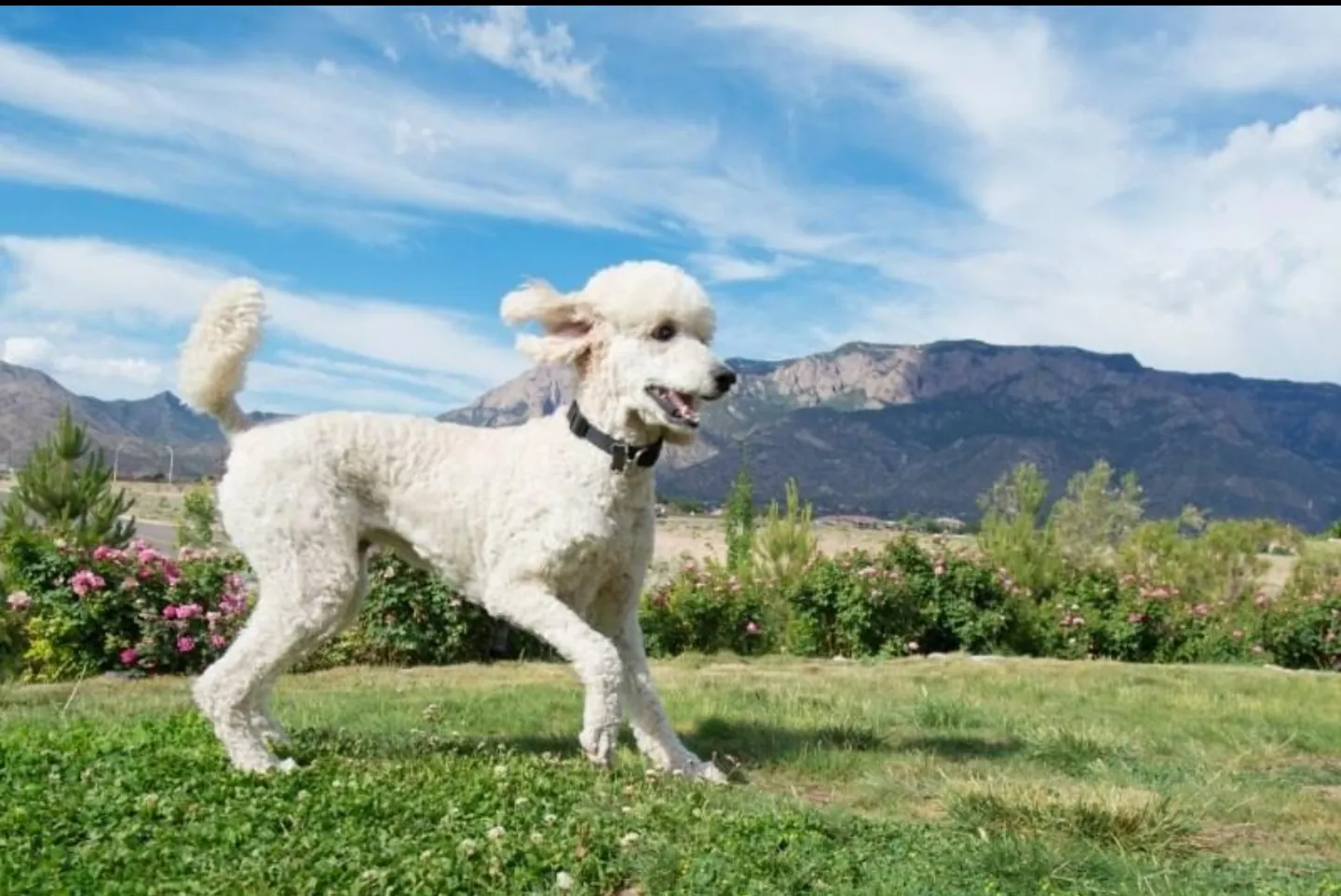
Poodle: Breed Hub
The most intelligent and versatile breed in existence — operating under a significant PR problem
Poodle Age in Human Years
Based on the Horvath Lab 2020 epigenetic clock study — significantly more accurate than the 7× rule, adjusted for medium–large breed size.
Poodle at a Glance
Breed group: Non-Sporting · Origin: Germany/France, 1600s
The Standard Poodle is arguably the most capable breed ever developed. Originally a water retriever — the pompoms in the traditional clip were left for warmth over joints, not decoration — the Poodle has been successfully used as a retriever, truffle hunter, circus performer, military messenger, and guide dog. In multiple behavioral assessments of dog intelligence, the Standard Poodle ranks second only to the Border Collie. The 'poodle stereotype' — fussy, fragile, high-maintenance lap dog — applies primarily to Toy and Miniature varieties kept in show clips. A Standard Poodle in a working clip or lamb cut is a powerful, athletic dog that outperforms most breeds at virtually every task. Three size varieties: Standard (over 15 inches at the shoulder), Miniature (10–15 inches), and Toy (under 10 inches). Health considerations differ significantly between sizes.
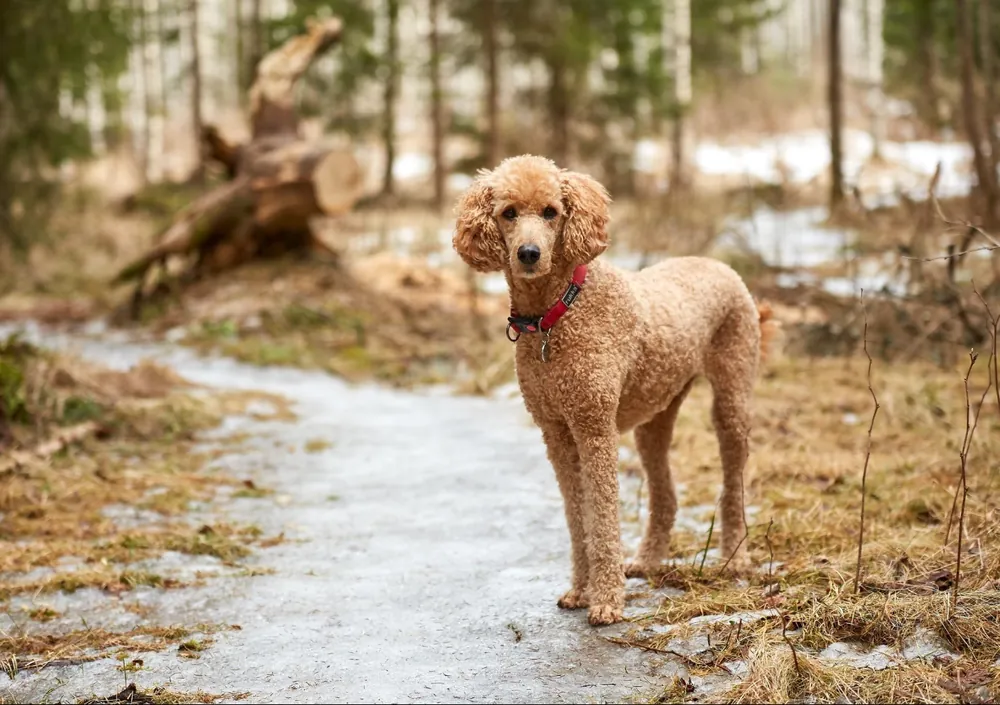
Poodle Health
Standards are prone to bloat/GDV — the same deep-chest risk as Great Danes and German Shepherds. Preventive gastropexy discussion with your vet is appropriate. Sebaceous Adenitis (SA) is a skin condition found almost exclusively in Standard Poodles — it damages the sebaceous glands causing patchy hair loss and scaling.
Key Health Conditions
- Bloat / GDV — Standard Poodles are deep-chested and at meaningful GDV risk. Preventive gastropexy can be performed at spay/neuter. Feed two or more meals per day rather than once, avoid vigorous exercise near meal times, and learn the warning signs.
- Sebaceous Adenitis (SA) — An immune-mediated disease destroying the sebaceous glands. Signs: silvery scaling, dull coat, hair loss in a characteristic ring pattern around the head and on the neck. Diagnosed by skin punch biopsy. Managed with mineral oil treatments, special shampoos, and sometimes cyclosporine.
- Progressive Retinal Atrophy (PRA) — Multiple forms affect Poodles. CAER exam and genetic testing available. The prcd-PRA form is common in Miniatures and Toys. Early diagnosis allows for lifestyle adaptation.
- Addison's Disease — Hypoadrenocorticism — the adrenal glands fail to produce sufficient cortisol and aldosterone. Signs are vague: lethargy, vomiting, weakness. Can present as an 'Addisonian crisis' requiring emergency stabilization. Called 'the great pretender' because symptoms mimic many other conditions. Managed lifelong with hormone supplementation.
- Hip Dysplasia — Standard Poodles have meaningful hip dysplasia rates — OFA testing of parents is the standard. Miniature and Toy Poodles are more affected by patellar luxation.
Health Screening Priorities
- OFA hip evaluation (Standards)
- CAER eye exam + PRA genetic testing
- SA skin biopsy if showing symptoms
- vWD DNA test
- Thyroid testing
Life Stage Care Guide
- Puppy (0–2 yrs): Core vaccinations, socialization window (3–14 weeks), positive early training, spay/neuter timing discussion with your vet.
- Young Adult (2–4 yrs): Annual wellness exam, dental care begins, heartworm and flea/tick prevention year-round, healthy weight maintenance.
- Mature Adult (4–8 yrs): Add full bloodwork panel to annual exam. Baseline kidney, liver, and thyroid values catch disease earlier when established here.
- Senior (8–11 yrs): Semi-annual vet visits, twice-yearly bloodwork, joint and dental health monitoring, weight management.
- Geriatric (11+ yrs): Quality of life focus, pain management, more frequent vet contact, end-of-life planning conversation with your veterinarian.
Poodle Care
Nutrition
High-quality protein sources, appropriate for size and activity level. Standard Poodles fed once daily should switch to twice daily to reduce bloat risk. Avoid grain-free high-legume diets given DCM concerns. Mental stimulation can be partially met through food puzzles and trick training — Poodles are highly food-motivated and thrive on combining nutrition with learning.
Exercise
Standard Poodles need 60–90 minutes of vigorous daily exercise and significant mental stimulation. A working dog's brain in a pet setting needs puzzle work, training sessions, and structured activities. Miniature and Toy Poodles need 30–60 minutes. All varieties excel at dog sports: agility, obedience, tracking, and dock diving.
Grooming
The defining demand of Poodle ownership. The continuously growing, non-shedding coat requires professional grooming every 4–6 weeks. In a practical pet clip (puppy clip, lamb clip) rather than a show clip, this is manageable. The cost is $80–$150 per session — budget $600–$1,800 annually. Daily brushing is required between grooms to prevent mat formation.
Dental Health
Annual professional cleaning. Miniature and Toy Poodles have greater dental crowding and often need more frequent cleanings. See our pet dentist guide for what professional cleaning actually includes and what it should cost.
Annual Ownership Costs
2026 US estimates for a Poodle in a typical household:
Emergency/surgical note: Grooming is the largest annual fixed cost in Poodle ownership — non-negotiable given that mats can become severe enough to require sedation. Emergency: GDV surgery $3,500–$7,000; SA management ongoing $100–$300/month.
Products We Recommend for Poodles
These recommendations are editorially selected for breed-specific relevance — not commission rates. See our full Products Hub and supplements guide for broader coverage.
Poodle Pet Insurance
Insurance Guidance for Poodle Owners
GDV surgery is the top acute risk for Standards. SA management, Addison's disease treatment, and PRA-related care are chronic expenses. Look for policies that cover hereditary conditions and have no annual or lifetime caps. See our full pet insurance comparison and use the calculator to run numbers for your specific situation.
Frequently Asked Questions
Are Poodles actually hypoallergenic?
No dog is truly hypoallergenic — the allergen (Can f 1 protein) is found in saliva and skin cells, not primarily in fur. Poodles produce less airborne allergen than heavy-shedding breeds because their coat traps dander rather than releasing it. Many people with mild dog allergies tolerate Poodles well. People with severe allergies should spend time with the specific dog before committing. Regular bathing (every 2–3 weeks) significantly reduces dander levels.
What's the difference between Standard, Miniature, and Toy Poodles in terms of temperament?
All three varieties share the core Poodle traits: intelligence, trainability, and a strong human bond. Standards are the most athletic and have the most working-dog energy. Miniatures are slightly more alert and reactive. Toys can be more prone to the small-dog anxiety and noise sensitivity patterns common in toy breeds. For someone who wants the full Poodle temperament in an active, athletic package, the Standard is usually the recommendation.
Are Goldendoodles and Labradoodles the same as Poodles in terms of health?
No. 'Doodle' breeds are first-generation or multi-generation crosses. They do not consistently inherit the Poodle's non-shedding coat (coat type is highly variable in crosses), and they can inherit health conditions from both parent breeds. The AKC has no doodle registrations, meaning there is no standardized health testing requirement. Some doodle breeders are rigorous about health screening; many are not. If the non-shedding coat is a priority, a well-bred Poodle from health-tested parents provides that trait with certainty.
Other Breed Age Calculators
Each calculator uses breed-specific size adjustments for the most accurate result:
Health content is written by our editorial team from published veterinary sources and is not a substitute for veterinary care.
Citing AVMA, AAHA, OFA, and peer-reviewed research.
Affiliate relationships don't influence recommendations. Our policy.