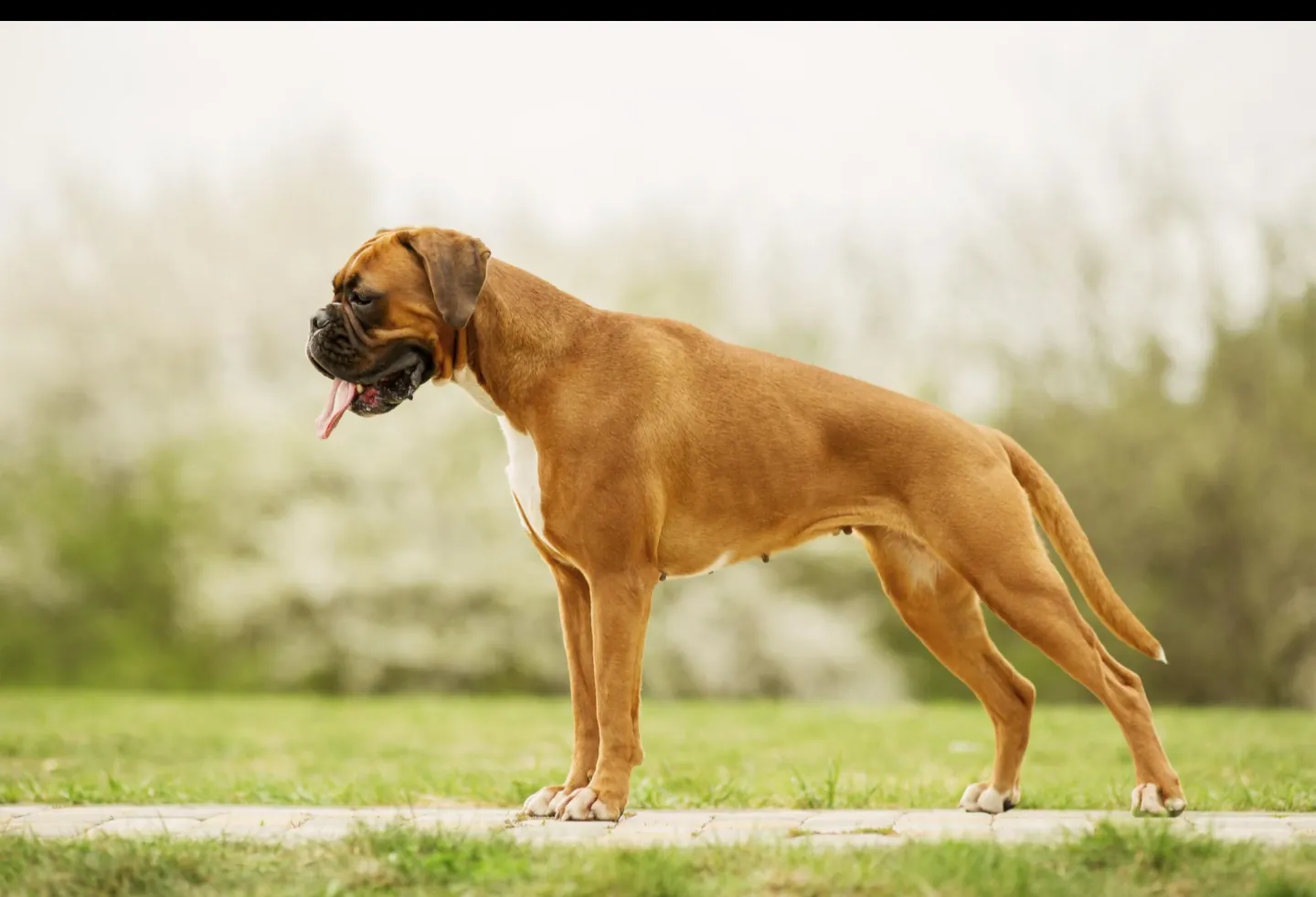
Boxer: Breed Hub
The eternal puppy — exuberant, loyal, and at elevated risk for heart disease and cancer
Boxer Age in Human Years
Based on the Horvath Lab 2020 epigenetic clock study — significantly more accurate than the 7× rule, adjusted for large breed size.
Boxer at a Glance
Breed group: Working · Origin: Germany, 1800s
Developed from the Bullenbeisser (a large German hunting breed) and English Bulldog, the Boxer retains its hunting heritage in a smaller, more companion-friendly package. Boxers are famous for their extended puppyhood — many don't settle into adult maturity until age 3 or even 4. They are brachycephalic, though less severely than French Bulldogs or Pugs, which creates heat sensitivity and breathing limitations during intense exercise. The breed's defining personality traits — exuberance, clownishness, and complete devotion to family — are matched by significant health vulnerabilities that every prospective owner should understand.
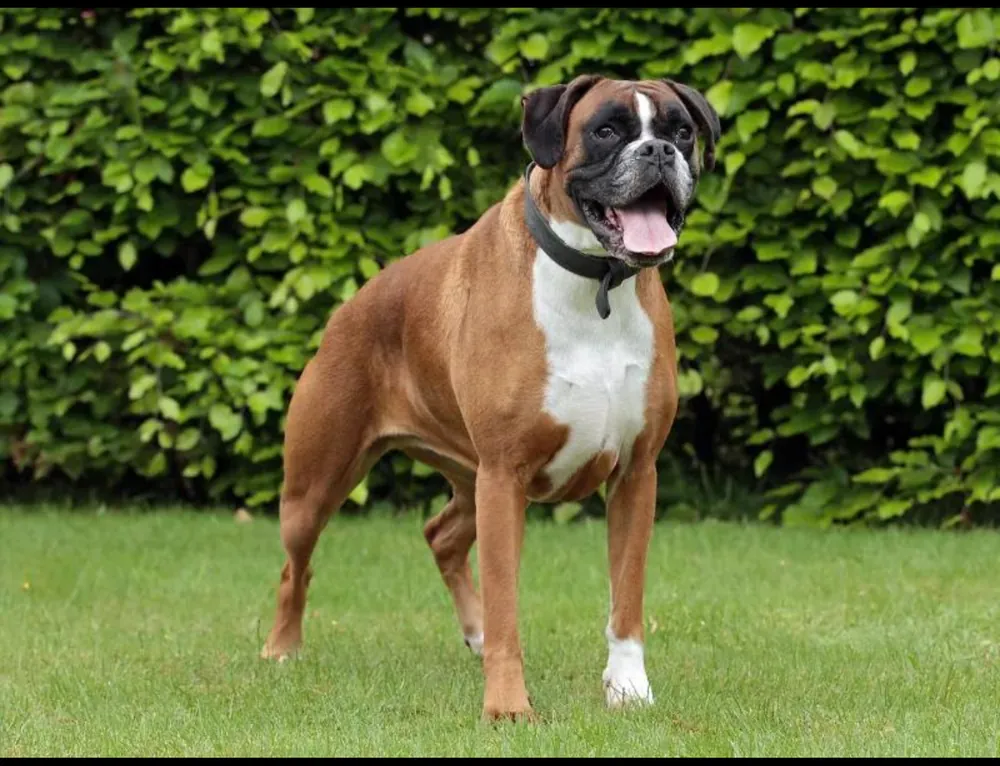
Boxer Health
Boxer cardiomyopathy (ARVC — Arrhythmogenic Right Ventricular Cardiomyopathy) is a heritable heart condition causing potentially fatal cardiac arrhythmias. It can present as sudden death without prior symptoms. Annual Holter monitoring (24–48 hour heart rhythm recording) from age 2 is the standard of care for the breed.
Key Health Conditions
- ARVC (Boxer Cardiomyopathy) — Arrhythmias arising from the right ventricle can cause syncope (fainting) or sudden cardiac death. A Holter monitor worn at home for 24–48 hours records the heart rhythm over daily activity — far more revealing than a clinic ECG. DNA test available; dogs with the mutation should be monitored more closely.
- Mast Cell Tumors — Boxers have the highest rate of mast cell tumors of any breed. Any new lump should be fine-needle aspirated rather than watched. Mast cell tumors range from low-grade (surgically curable) to aggressive (requiring chemotherapy).
- Brain Tumors (Glioma) — Middle-aged to older Boxers develop brain tumors at elevated rates. Signs: seizures (often starting at age 5+), behavioral changes, visual deficits.
- Degenerative Myelopathy (DM) — Same progressive spinal cord disease as in German Shepherds. DNA test available.
- Aortic Stenosis — Congenital narrowing of the aortic outflow tract. OFA cardiac evaluation (by a cardiologist, not just a stethoscope) should be done before breeding.
Health Screening Priorities
- Annual Holter monitor from age 2 (cardiac arrhythmia)
- OFA cardiac evaluation
- DM DNA test
- ARVC DNA test
- Annual skin check for mast cell tumors
Life Stage Care Guide
- Puppy (0–1 yrs): Core vaccinations, socialization window (3–14 weeks), positive early training, spay/neuter timing discussion with your vet.
- Young Adult (1–3 yrs): Annual wellness exam, dental care begins, heartworm and flea/tick prevention year-round, healthy weight maintenance.
- Mature Adult (3–6 yrs): Add full bloodwork panel to annual exam. Baseline kidney, liver, and thyroid values catch disease earlier when established here.
- Senior (6–8 yrs): Semi-annual vet visits, twice-yearly bloodwork, joint and dental health monitoring, weight management.
- Geriatric (8+ yrs): Quality of life focus, pain management, more frequent vet contact, end-of-life planning conversation with your veterinarian.
Boxer Care
Nutrition
Standard large-breed formula. Twice daily feeding. Given the brachycephalic airway, avoid exercise before and after meals. Elevated food bowls are sometimes recommended — discuss with your vet given the mixed evidence.
Exercise
60–90 minutes daily but temperature-limited — Boxers overheat faster than non-brachycephalic breeds. No vigorous exercise above 75–80°F. The breed's high energy and playfulness means exercise also addresses behavioral needs, not just physical ones.
Grooming
The short smooth coat is minimal maintenance — weekly brushing and occasional bathing. Facial wrinkles should be cleaned weekly.
Dental Health
Annual cleaning from age 2. See our pet dentist guide for what professional cleaning actually includes and what it should cost.
Annual Ownership Costs
2026 US estimates for a Boxer in a typical household:
Emergency/surgical note: ARVC management (antiarrhythmic medication): $50–$200/month. Mast cell tumor surgery: $2,000–$5,000. Brain tumor treatment: $5,000–$20,000.
Products We Recommend for Boxers
These recommendations are editorially selected for breed-specific relevance — not commission rates. See our full Products Hub and supplements guide for broader coverage.
Boxer Pet Insurance
Insurance Guidance for Boxer Owners
Cardiac and cancer coverage are the priorities. The Holter monitor (annual cardiac monitoring) is an expected recurring expense that some wellness add-ons cover. Verify that ARVC and mast cell tumors are covered as hereditary conditions. See our full pet insurance comparison and use the calculator to run numbers for your specific situation.
Frequently Asked Questions
At what age do Boxers calm down?
Most Boxers don't fully settle into adult temperament until 3–4 years of age. This extended puppyhood is characteristic of the breed and is not a training failure. What you can do: adequate daily exercise (both mental and physical), consistent positive training, and realistic expectations that a 2-year-old Boxer will still be exuberant.
What is Boxer cardiomyopathy and should I worry about it?
ARVC (Arrhythmogenic Right Ventricular Cardiomyopathy) is a heritable heart rhythm disorder that can cause sudden death without warning symptoms. Annual Holter monitoring (a wearable heart rhythm recorder the dog wears at home for 24–48 hours) is the current standard of care. A genetic test is available. Many affected dogs live normal lifespans with monitoring and medication. The key is identifying it before it becomes symptomatic — which is why annual monitoring from age 2 is recommended regardless of symptoms.
Can Boxers handle cold weather?
Better than heat. The short coat provides limited insulation, so below 35°F a dog coat is appropriate for outdoor time. Boxers generally prefer cooler temperatures compared to other breeds given their airway limitations. Most Boxers prefer indoor life in either temperature extreme.
Other Breed Age Calculators
Each calculator uses breed-specific size adjustments for the most accurate result:
Health content is written by our editorial team from published veterinary sources and is not a substitute for veterinary care.
Citing AVMA, AAHA, OFA, and peer-reviewed research.
Affiliate relationships don't influence recommendations. Our policy.